


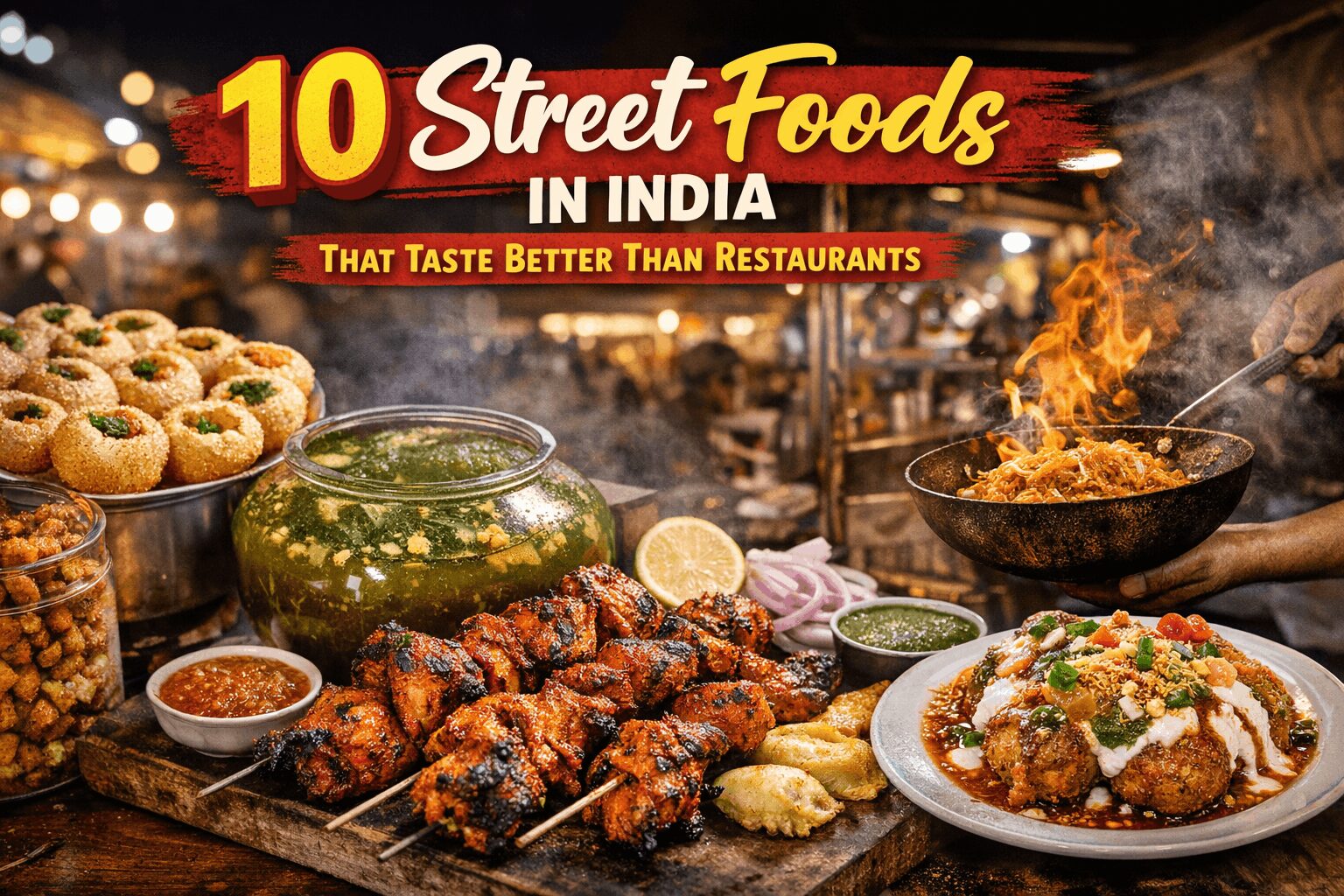
India is not just a country—it’s a living, breathing food carnival. From the narrow lanes of Old Delhi to the buzzing beaches of Mumbai, street food defines the real taste of India. While fine-dining restaurants may offer presentation and comfort, the heart and soul of Indian cuisine thrive on the streets.
Street vendors carry generations of recipes, secret spice blends, and cooking techniques that no restaurant can truly replicate. The aroma, the sizzling sounds, and the crowd waiting around a cart add magic to every bite. Here are 10 street foods in India that often taste better than what you’ll find in restaurants.
No restaurant version can match the thrill of eating pani puri from a roadside stall. Crisp hollow puris are filled with spicy mashed potatoes, chickpeas, tangy tamarind chutney, and spicy mint water. The vendor serves them one by one, ensuring each puri bursts with flavor in your mouth.
What makes street pani puri special is the freshness of the flavored water and the custom spice level. You can ask for extra spicy, sweet, or tangy—something that feels more personal than a standard restaurant serving.
Often called India’s burger, vada pav is the pride of Mumbai. A spicy potato fritter is tucked inside a soft bun with dry garlic chutney and fried green chili.
Street vendors fry the vada fresh in hot oil, giving it a crisp outer layer and soft, flavorful inside. Restaurants may try to upgrade it with cheese or fancy sauces, but nothing beats the simplicity and heat of the roadside classic served in buttered pav.
Aloo tikki chaat is a combination of crispy potato patties topped with yogurt, chutneys, onions, and spices. The street version is unbeatable because the patties are freshly fried and assembled instantly.
The balance of sweet, spicy, and tangy flavors creates a taste explosion. Vendors often adjust ingredients based on your preference, making every plate unique.
Originating in Mumbai, pav bhaji is a buttery vegetable mash served with toasted bread. Street vendors cook it on large iron griddles, adding generous amounts of butter and special spice blends.
The smoky flavor from the griddle and the fast-paced cooking style create a depth of taste that’s hard to replicate in restaurant kitchens. The sight of bhaji sizzling in butter is part of the experience.
This North Indian favorite consists of spicy chickpea curry served with fluffy deep-fried bread. Street stalls often serve chole bhature early in the morning, and the freshness makes all the difference.
The chole is slow-cooked with traditional spices, while the bhature is fried on the spot. The combination of crisp, soft, spicy, and tangy flavors makes it irresistible.
Though dosa is available in high-end South Indian restaurants, the roadside dosa has its own charm. Cooked on a flat iron tawa, it becomes extra crispy and golden.
Vendors often experiment with fillings—cheese dosa, paneer dosa, or spicy masala dosa. The chutneys are freshly prepared, and the speed at which dosas are made keeps them hot and crisp.
Kathi rolls are popular in Kolkata and across India. A flaky paratha is wrapped around spicy chicken, egg, paneer, or vegetables, topped with onions and chutney.
Street vendors cook the paratha fresh and assemble the roll in front of you. The smoky flavor and balanced spices make it more flavorful than many restaurant versions that focus too much on presentation.
Momos, originally from the Himalayan region, have become a street favorite across India. Steamed or fried dumplings filled with vegetables or meat are served with spicy red chutney.
Street momos stand out because of their fresh preparation and bold, spicy chutney. The intense heat of the sauce combined with soft dumplings creates a memorable bite.
For those with a sweet tooth, jalebi is a must-try street dessert. Thin batter is swirled into hot oil, fried until crisp, and soaked in sugar syrup.
Street vendors serve jalebis hot and dripping with syrup. The crunch and sweetness are far superior when eaten fresh from the kadai compared to pre-made restaurant versions.
Though widely served in restaurants, street-style tandoori chicken often tastes better because it is cooked in traditional clay ovens placed right on the roadside.
The smoky aroma, charred edges, and bold marinade flavors create a rustic taste that feels authentic. Served with sliced onions and mint chutney, it’s simple yet deeply satisfying.
Most street food is cooked right in front of you. Fresh ingredients and immediate serving enhance flavor.
Many vendors use family recipes passed down through generations, preserving traditional taste.
You can adjust spice levels, toppings, and flavors as per your liking.
Street vendors use high heat, iron griddles, and clay ovens that add unique textures and smoky flavors.
The environment—the sounds, aromas, and crowd—makes the food taste even better.
While street food is delicious, it’s important to choose vendors wisely:
Pick stalls with high customer turnover.
Ensure food is freshly cooked and served hot.
Avoid raw items if hygiene seems questionable.
Drink bottled or safe water.
Street food in India is more than just quick bites—it’s culture served on a plate. It connects people from all walks of life and showcases the country’s culinary diversity. Restaurants may provide comfort and ambiance, but the true essence of Indian flavors often lives on the streets.
If you truly want to explore India, skip the fancy menus for a while and follow the aroma of sizzling spices. You might discover that the most unforgettable meals are served from a simple cart under the open sky.
©Famous India Blog. All rights reserved.
Creativity By Needinfotech